
Field guide · Rivell
Touchless weapons detection: how walk-through screening works
"Touchless" and "frictionless" describe an experience goal: screening people at walking pace, often without emptying pockets or being patted down. Here is what makes that possible and what it still requires.
Rivell Concealed Weapons Detection team
7 min read
Last reviewed: November 2026
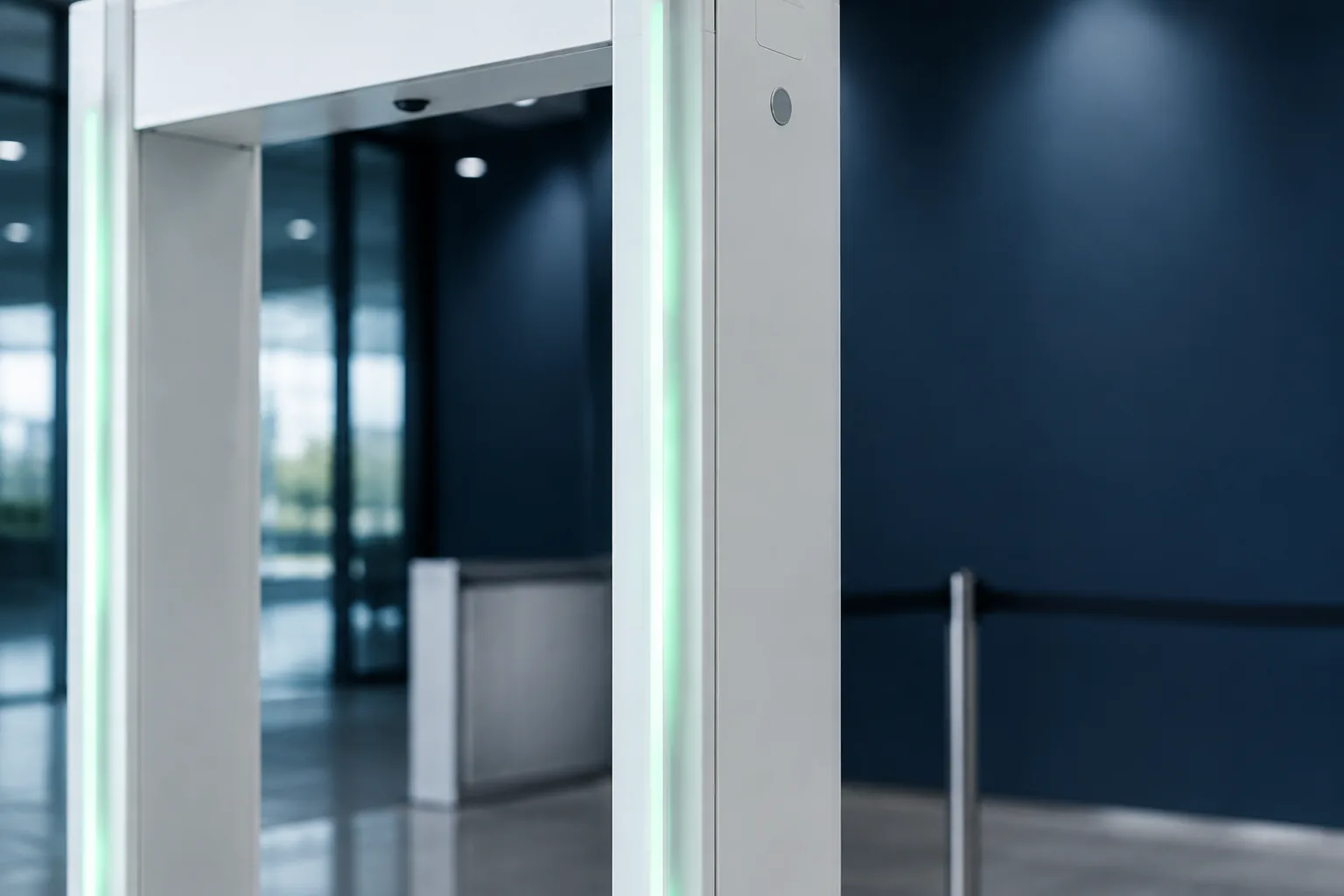
Illustrative image
Key takeaways
Touchless screening reduces divestment and physical contact; it doesn't eliminate secondary checks. Layout, staffing and alert procedures make or break the experience.
What "touchless" means
In a touchless entrance process, visitors walk through a lane with everyday items, the system flags potential threats and trained staff conduct targeted secondary checks when needed. The word describes the intended experience of routine passage. It does not mean that every visitor completes screening without an interaction or that staff can ignore an alert.
Contrast that with wanding, pat-downs or a full divest-and-tray process. Those approaches ask people to stop or handle belongings as part of routine screening. Walk-through screening aims to reduce those steps for most visitors while retaining a defined secondary process. The useful question is what people will actually do at your entrance, not which adjective appears on a brochure.
Describe the complete journey from approach to entry. If bags or large electronics need separate handling, include that in the explanation. A process is easier to trust when guests understand the normal route and the possibility of a brief secondary check.
How the technology enables it
DHS describes the Evolv Express platform as using AI-assisted electromagnetic sensing with magnetic-signature analysis and alert localization on an image of the person. [S4] The image-aided alert directs attention to the potential item's location so trained people can focus the secondary process. Software supports that attention; it does not make the final decision.
The platform has single- and dual-lane, indoor and outdoor, and portable configurations described in the DHS survey. [S4] Choose a configuration with the entrance plan rather than assuming the same setup fits every door. Review placement, approach, power and network requirements alongside the people and belongings being screened.
Ask the supplier to explain settings and how operators use the alert. A useful evaluation includes the handoff to secondary screening and the return to the normal entry flow. The lane, operator view and procedures should be reviewed as a connected process.
"Open gate" and other designs
Open-gate style walk-through detectors, including portable pillar-style units, and passive magnetometer systems also aim to reduce friction. DHS's 2024 survey describes these categories. [S4] Similar-looking entrances can use different sensing principles, so a design label should not stand in for a technical explanation.
Ask what the proposed system detects, which evidence supports the claim and what operating conditions apply. Compare products within a defined category before comparing the experience they promise. A system that reduces divestment still needs clear alert procedures, an accessible route and staff who know what happens next.
Use a category guide to frame the conversation, then request current information for the specific configuration. Do not turn a survey listing into a performance ranking. The goal is to understand which approach fits the entrance and what your team must do to operate it.
Designing a touchless entrance
Start before the lane. Visitors should see where to go and what to do with belongings before they reach the operator. Review approach and queue space, lane spacing and signage together. Keep the instructions consistent across entrances so people do not discover a different procedure after waiting in line.
Provide a secondary screening area outside the main flow. It needs a clear handoff from the lane monitor and a route back to entry once the check is complete. Discuss bag procedures in the same design: which items stay with the visitor, which need separate handling and who is responsible for each step.
Define lane monitor, secondary screener and supervisor roles. Staff should know who watches passage, who addresses an alert and who handles questions beyond the routine procedure. Review an accessible path and alternatives before go-live, not as an improvised exception when someone arrives.
Walk through the proposed entrance from a guest's perspective. Ask whether the instructions make sense without a long explanation, whether a person can reach the alternate route and whether a secondary check blocks the queue. Use that review to refine the layout before evaluating the full process.
What touchless doesn't mean
Touchless does not mean no alerts, no staff or detection of everything. Sensitivity involves a trade-off: settings affect the balance between potential threat detection and alerts on harmless items. A quiet lane is not, by itself, evidence that the screening program is working well. Keep the agreed risk profile and test conditions attached to any performance discussion.
Every alert needs a defined response by trained people. Explain the secondary check respectfully and avoid treating an alert as a conclusion about someone. Staff should know how to ask for cooperation, how to de-escalate a difficult interaction and when to involve a supervisor under the site's procedures.
Communicate limitations to leadership and visitors alongside the intended experience benefits. A touchless lane remains one layer within access control, video and emergency response. The experience goal cannot replace the wider plan or an honest explanation of what remains uncertain.
Measuring success
Review time to entry at peak, alert rates and resolution time, guest feedback and staff confidence. These observations belong together: a fast passage through the lane says little about a queue that forms at secondary screening. Ask staff where handoffs are difficult and guests where instructions are unclear.
Compare observations with the operating assumptions used in design. Review lane allocation, bag procedures and staffing before attributing every issue to equipment. Keep changes deliberate and document the procedure that staff are expected to use. Tuning should support the risk assessment and the whole entrance process, not simply aim for fewer alerts.
Use refresher training when procedures change and make the current explanation available to visitors. A practical improvement may be clearer approach signage or a better handoff rather than a new technology feature. The important test is whether the process remains understandable, accessible and responsibly operated.
A site survey helps establish those goals before choosing equipment. Bring the arrival pattern, visitor belongings and existing security systems into the conversation. Then evaluate the proposed experience with the people who will run it and keep reviewing it after go-live.
Keep the planning record useful after the buying decision. Record the entrance assumptions, the agreed procedures and the people responsible for reviewing changes. When the layout, visitor items or staffing changes, return to those questions rather than assuming the original process still fits. A written plan gives operators and leadership the same starting point for a practical review, without creating a new performance promise.
Review the exception path with the same care as routine passage. Ask what the lane monitor says, how the secondary screener receives the visitor and where the supervisor fits if a question cannot be resolved. Include bags and an accessible alternative in that review. Keep the process understandable without suggesting that an alert says anything about intent. A shared explanation helps operators apply the procedure consistently and helps visitors know what is being asked of them. Retain the agreed instructions with the entrance plan so future layout or staffing changes can be reviewed against the same goals.
Frequently asked questions
Is touchless screening slower or faster than metal detectors?
It depends on your design; DHS cautions against relying on multiplier claims. [S4]
Do people need to remove phones?
Often not, depending on settings.
Continue exploring
Request a site survey
Start with your entrances, your people and a practical plan.