
Field guide · Rivell
AI concealed weapons detection, explained honestly
"AI" appears on almost every weapons screening brochure. Here is what it actually does in an entrance screening system, where it helps, and where human judgment remains essential.
7 min read
Last reviewed: November 2026
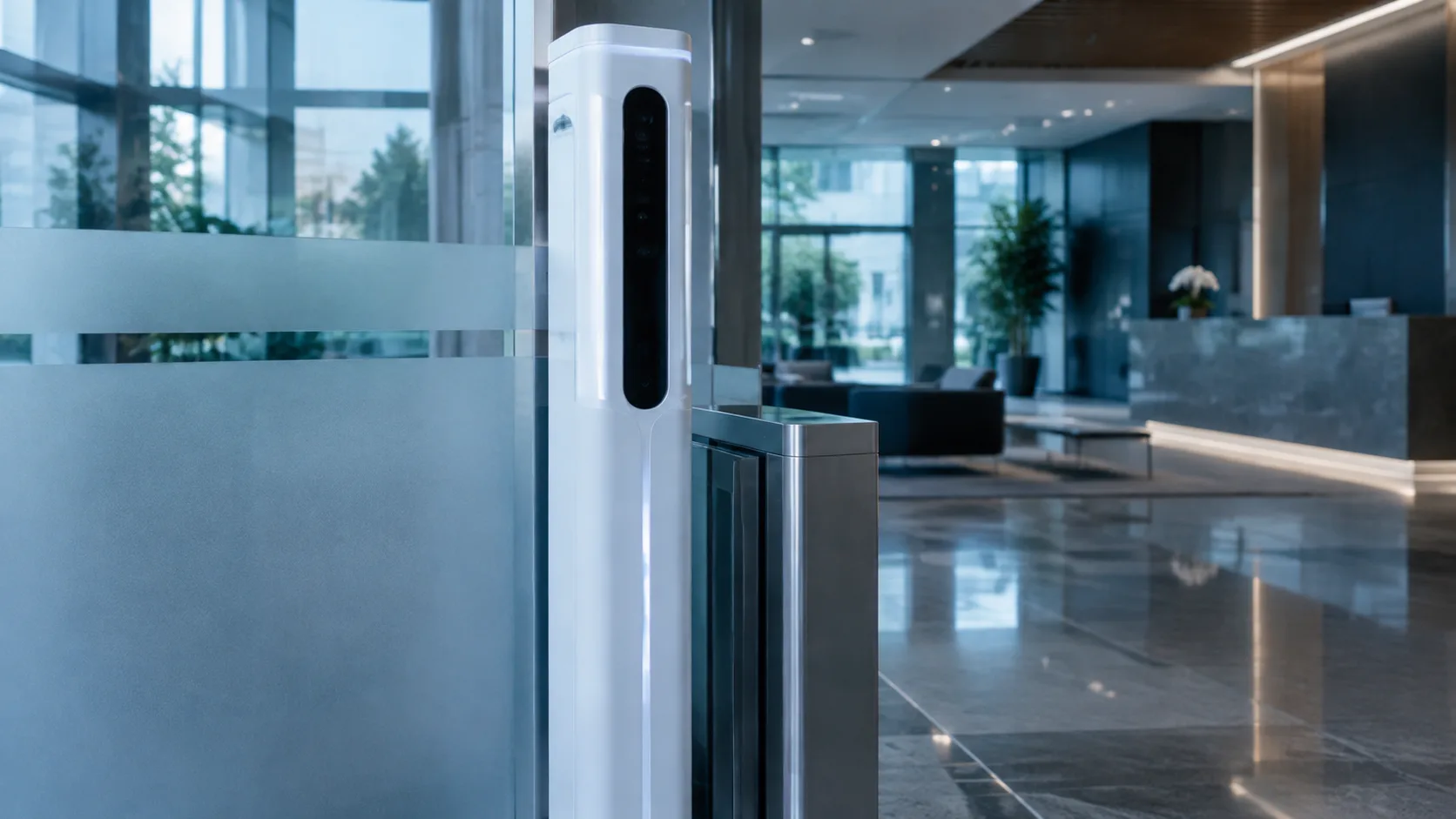
Illustrative image
Key takeaways
In walk-through screening, AI typically means software that classifies sensor signals; it doesn't "see" weapons the way a person does. It can reduce nuisance alarms and focus attention, but it can miss items and it can alert on harmless ones. Demand evidence, test in your environment, and keep trained people in the loop.
Where the AI sits in a screening system
In an AI-assisted walk-through system, sensors measure how a person and their belongings disturb an electromagnetic field. Software models trained on many examples then estimate whether the pattern looks like a potential threat or like everyday items, and where on the person it is. DHS describes the Evolv Express platform this way: active electromagnetic sensing, magnetic signatures used for alarm differentiation, and AI-powered signal analytics. [S4] The output is an alert for a human operator, not a decision.
That distinction belongs at the center of the purchase conversation. A sensor signal and a software classification are not a conclusion about a person. The entrance still needs someone who understands the alert, an appropriate secondary area and written procedures. The technology helps direct attention; your program defines what happens next.
Three different things called "AI weapons detection"
AI-assisted entry screening is this site's focus: people walk through a lane and signals are analyzed for concealed items. The lane is a controlled point in an entrance process, with people assigned to resolve alerts.
AI visual gun detection is different. Video analytics on existing cameras look for visible firearms. It answers a different question from a concealed screening lane and should not be treated as the same product category.
Emerging sensing includes Wi-Fi sensing, millimeter wave and stand-off approaches. These use different physics and are often earlier in maturity. Searches like "ai concealed weapons detection reviews" mix these together; compare like with like.
Before comparing a shortlist, write down what each option senses and where it operates. Is it an entrance lane, video analytics or another sensing approach? The answer determines what evidence, staffing and integration questions you should ask. A single AI label is not enough to make these choices comparable.
What AI does well
AI-assisted screening applies pattern recognition at speed and consistency across thousands of screenings. The Evolv Express platform's signal analytics are designed to separate many common items, including phones, keys and coins, from likely threat signatures. [S4] Localization helps make secondary checks targeted, while counts and alert trends help inform staffing and layout over time.
These benefits should be evaluated as operating goals rather than universal promises. Ask how the alert appears to the lane operator and how that information supports a specific check. Ask what data your team can use for review and what actions that review might inform. The value is in a better-directed process, not in eliminating human judgment.
What AI cannot do
It cannot guarantee detection: every system has a probability of detection that depends on the object, its orientation and placement, and the sensitivity setting. [S4] It cannot read intent. It can be fooled by environments (nearby moving metal, structural steel and electromagnetic interference can affect metal-detection-based systems [S4]). And it cannot replace procedures: what staff do after an alert determines whether screening works. DHS also notes that the systems in its 2024 survey are designed primarily for weapons capable of mass casualties, rather than smaller close-proximity weapons such as knives or small handguns, and that manufacturer performance information in the survey was not independently verified. [S4]
Do not collapse those qualifications into a simple claim that a system finds weapons. Ask which objects and placements were evaluated and under which settings. A responsible decision acknowledges both missed items and harmless-item alerts. Planning the response to either possibility is part of deployment, not an optional task after equipment arrives.
Lessons from regulators and public reporting
In November 2024 the Federal Trade Commission settled with Evolv; the stipulated order prohibits unsupported representations about weapons detection ability, ignoring harmless items, accuracy and false alarm rates compared with metal detectors, screening speed and labor costs, and gave certain K-12 customers an option to cancel contracts. [S7] Evolv neither admitted nor denied the allegations. [S7] For buyers, the takeaway applies to every vendor in this space: insist on evidence and set honest expectations. We'd rather lose a sale than oversell a safety system.
Use that lesson when reviewing a proposal and when communicating with leadership. Separate documented information from a supplier's expectation and from your own operating goal. If a claim is important to the purchase, ask what supports it before repeating it to staff, families or visitors. Honest limitations belong alongside the potential benefits.
How to evaluate AI weapons detection claims
Ask for detection probability by threat class, at a stated throughput and sensitivity setting, with confidence intervals. [S4] Ask which standard or independent test the system was evaluated against, such as ASTM F3566-22 for walk-through metal detectors. [S5] Evidence should tell you what was tested and how, not simply present an accuracy label.
Ask for nuisance alarm behavior with the items your visitors actually carry: laptops, binders, instruments and medical equipment. Run an on-site evaluation with agreed acceptance criteria before full deployment. The criteria should make the proposed experience and limitations understandable to the people who will operate the entrance.
Ask how models are updated, how updates are validated and how you will be notified. Ask what data is collected, where it is stored and for how long. Those are part of the operating and privacy questions, not a separate conversation to defer until after purchase.
Bring the answers together in one comparison. Keep the same threat classes, visitor items and entrance assumptions across vendors so you can see what differs. Where an answer is incomplete, request the missing evidence rather than treating silence as a positive result.
Deploying AI screening responsibly
Pair technology with written procedures, training and uniform screening for everyone entering. [S3] Provide accessible alternatives, a communication plan, periodic review of alert data and settings, and an independent check of whether screening is meeting your goals.
Explain what the system does and does not do before go-live. Describe the secondary check and the role of trained people without promising perfect detection. Keep the entrance plan connected to access control, video and emergency communications so screening is one layer of the program.
A site survey is where these questions become specific: which doors, which visitor items, which staff roles and which integrations. The result should be a deployment plan your team understands, including the limitations it must manage. AI is useful only within that practical, human-centered process.
Keep a clear distinction between what the sensors measure, what the software estimates and what trained staff decide. Ask the supplier to describe each part of that process in language your operators and leadership can understand. A good explanation should make the limits clearer, not hide them behind the AI label.
Use the same distinction when communicating with your community. Explain the purpose of screening, the possibility of secondary checks and the fact that people remain responsible for resolving alerts. Do not imply that software knows intent or that a lack of an alert is a guarantee.
The buying decision should carry those expectations into deployment. Ask who supports testing, settings, procedures, training and ongoing review. Make the proposed benefit specific to your entrance while retaining every condition attached to the supporting evidence. That gives the team a practical basis for evaluating the technology and operating it responsibly.
Questions about this topic
Does AI weapons detection use facial recognition?
Not for screening decisions in the platform described by DHS; its cameras capture images of people who cause alerts, which the manufacturer states it does not collect or use. [S4] Confirm your configuration.
Does the AI learn from our site?
Ask the vendor how models are trained and updated.

Request a site survey
Start with your entrances, your people and a practical plan.
Sources
- [S3]CISA, Public Venue Security Screening Guide
- [S4]DHS SAVER, Walk-Through Weapons Screening Systems for Mass Casualty Threats — September 2024
- [S5]ASTM F3566-22, Walk-Through Metal Detector Performance Specifications and Test Methods
- [S7]FTC v. Evolv Technologies Holdings, Stipulated Order — November 26, 2024