
Field guide · Rivell
Weapons screening for event venues and stadiums
At venues, screening succeeds or fails in the window before doors or start time. Planning around that peak is the whole game.
Rivell Concealed Weapons Detection team
7 min read
Last reviewed: November 2026
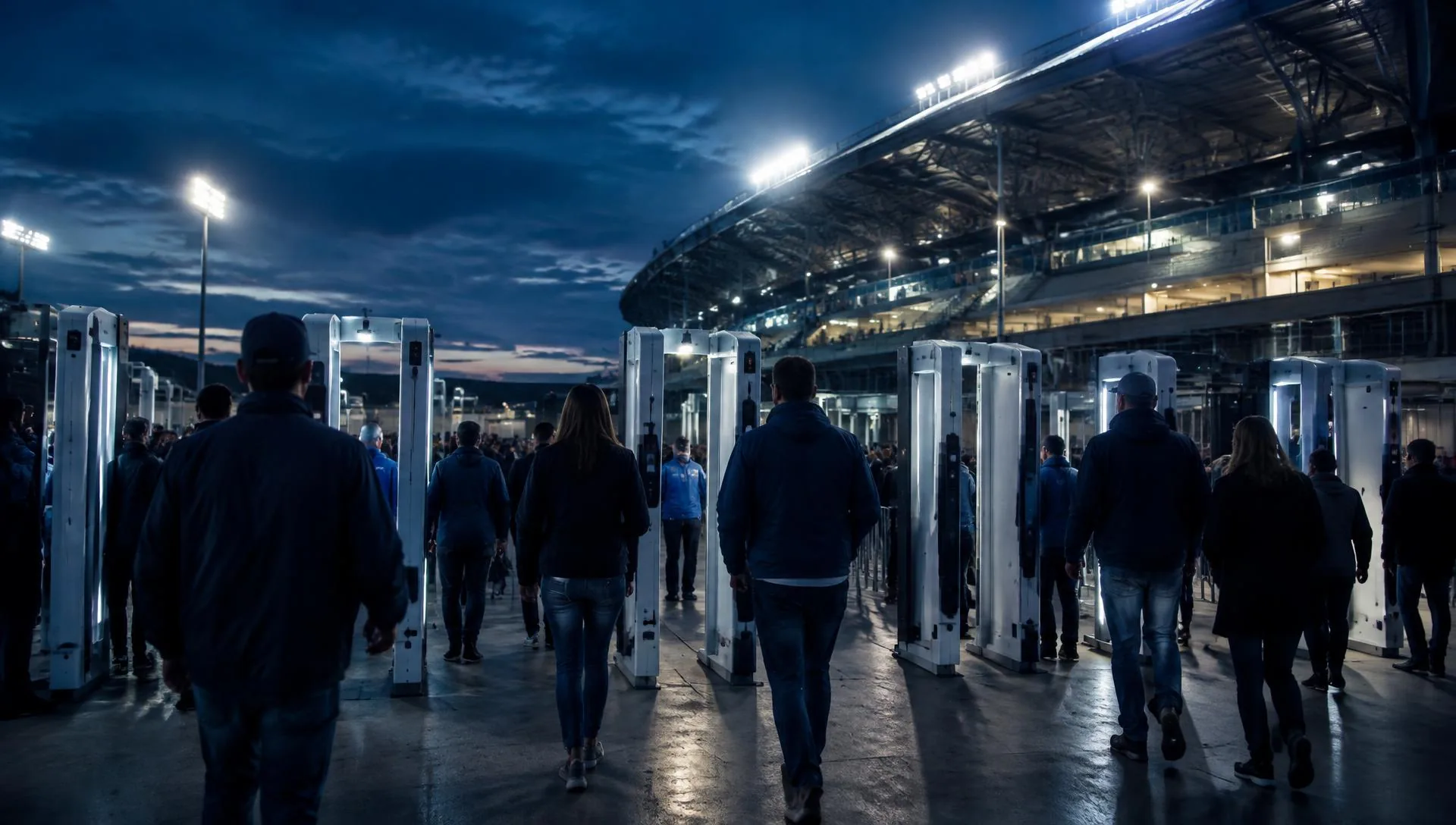
Illustrative image
Key takeaways
Plan to effective throughput, not maximums. Bag policy and communication shape queues as much as technology. Outdoor and temporary deployments need their own plan.
Start with CISA's venue guidance
CISA's Public Venue Security Screening Guide covers screening policies, consistent application, staff roles and layered security for venues. [S3] Use that wider framework before focusing on lane equipment. Agree who is screened, how prohibited items are handled and which team makes decisions when an interaction falls outside the routine process.
Connect the gate plan to the venue's other controls and emergency procedures. Staff and contractor entrances, public gates and re-entry need clear rules rather than separate informal arrangements. A policy should be understandable to the people who work the event as well as the people approving it.
Review the guest journey from approach to admission. Identify where visitors receive instructions, where bags are handled and where alerted guests go. A screening plan is more than a location for equipment; it is a shared procedure that staff can apply consistently during the busiest part of the event.
Ingress modeling
Start with expected attendance and the arrival curve for the event type. Review gates, lane allocation and the space available for secondary screening. Effective throughput is lower than maximum and site-specific, as DHS explains. [S4] A published maximum cannot tell you how a queue behaves when alerted guests need an additional check.
Consider how guests choose gates, where they wait and how ticketing connects to screening. Include re-entry policy in the same discussion. Ask which assumptions support the recommended lane count and how supervisors will recognize when one part of the entrance process needs attention.
Model the whole entrance instead of treating lanes as interchangeable counters. Bag checks, secondary screening and admission each need space and assigned responsibilities. Review a busy approach with the people who supervise gates, then use the observations to refine the plan before selecting the configuration.
Keep the assumptions available for later review. If arrival patterns or policies change, revisit the lane and staffing plan rather than expecting the original configuration to fit automatically. A site survey makes those trade-offs specific to the venue.
Bag policy and messaging
Define clear-bag or size policies, where bags are checked and what guests should do with items that need separate handling. Do not rely on an operator to explain a long policy after a guest reaches the lane. Pre-event messaging and a what-to-expect page can carry the explanation before arrival.
Place signage on the approach where people can read it before joining the queue. Use consistent wording across ticketing information, venue communications and gate signs. If a policy changes, update all of those places rather than leaving staff to reconcile conflicting instructions.
Ask guest-services staff to review the explanation from a visitor's perspective. Make the normal route, accessible alternative and secondary process easy to understand. Clear communication supports a respectful experience without promising that screening will be effortless for every guest.
Indoor, outdoor and temporary
Outdoor and temporary setups need their own review of weather, power and network. The Evolv Express platform is described as IP56 for outdoor use in the DHS survey. [S4] Confirm the proposed configuration and installation requirements rather than treating a rating as a complete deployment plan.
Review portability for festivals or entrances that change between events. Identify where units are stored, how they reach the gate and who verifies the setup before use. Power and network routes should be planned alongside the accessible path and queue, with facilities and IT involved in the same conversation.
Consider potential interference from nearby structures and the environment. [S4] A temporary gate may have a different layout from a permanent entrance, so review placement whenever the operating arrangement changes. Include signage and secondary screening space in the setup plan, not just the unit footprint.
Give the event team a clear handover describing the configuration, responsibilities and checks required before guests arrive. Outdoor capability and portability are useful only when the people setting up the entrance know the conditions and procedures that apply.
Staffing and training
Define the lane roles, secondary screeners and supervisors for the entrance plan. Contractor staff should receive a consistent explanation of the procedures they will use. Do not assume familiarity with screening at another venue means familiarity with this venue's policies or escalation path.
Training should include what an alert means, how to direct a guest to secondary screening and who handles questions or refusal. Use respectful language and include de-escalation in the operating discussion. An alert is not a conclusion about a person, and the response should follow the written procedure.
Review handoffs between gate staff, guest services and the team supervising the event. Staff need to know how to request support without abandoning their assigned role. Keep current instructions accessible and make changes clear before the next event rather than introducing conflicting practices at different gates.
Data and continuous improvement
Use event-by-event data on volumes and alerts to review staffing, lane allocation and settings. Combine that information with operator observations about queues and secondary checks. The purpose is to understand the entrance process, not to produce a headline about speed that ignores the conditions of the event.
Review whether bag policy and communication matched what guests experienced. Ask where instructions were unclear and where staff needed more support. Changes should be deliberate, documented and explained before the next deployment so operators are not left following different versions of the plan.
Keep the risk assessment in the discussion when reviewing settings. Fewer alerts are not automatically a better result; the screening program still has detection goals and limitations. Compare observations with the assumptions used in design and update the whole operating plan where needed.
Integration
Alerts can connect with live video for command-center review through Avigilon integration described in the OEM partnership information. [S2] Plan who receives the alert and how that information supports the gate team. The connection should make a response easier to understand, not create another notification without an owner.
Review radios and communications alongside video. Staff should know who verifies information, who supports the secondary process and who coordinates an escalated response. Keep these responsibilities linked to the venue's broader procedures rather than treating the lane as a stand-alone device.
Bring security, facilities, IT and event operations into the site survey. The result should explain entrance layout, staffing, integration and the limitations the wider program must manage. That practical plan is a stronger starting point than comparing advertised maximum throughput alone.
Before each deployment, make the entrance plan understandable to the people setting up and operating it. Review the approach, bag instructions, accessible route and secondary area as one process. Ask who resolves a routine alert and who supports an interaction that needs more attention. Keep gate communication connected to the event command team so staff understand the handoff rather than receiving isolated notifications. Record changes from the previous event and explain them before guests arrive. The aim is a consistent, practical procedure that follows the venue's policy and can be reviewed after the event, not a new promise about screening speed.
Frequently asked questions
How many lanes do we need?
Lane count is determined by modeling your arrivals with a site survey.
Can units move between gates?
Portable configurations exist; plan power and network. [S4]
Continue exploring
Request a site survey
Start with your entrances, your people and a practical plan.