
Field guide · Rivell
Weapons screening for hospitals and health systems
Hospitals are open 24/7 to people under stress. Screening has to protect staff and patients without delaying care.
Rivell Concealed Weapons Detection team
7 min read
Last reviewed: November 2026
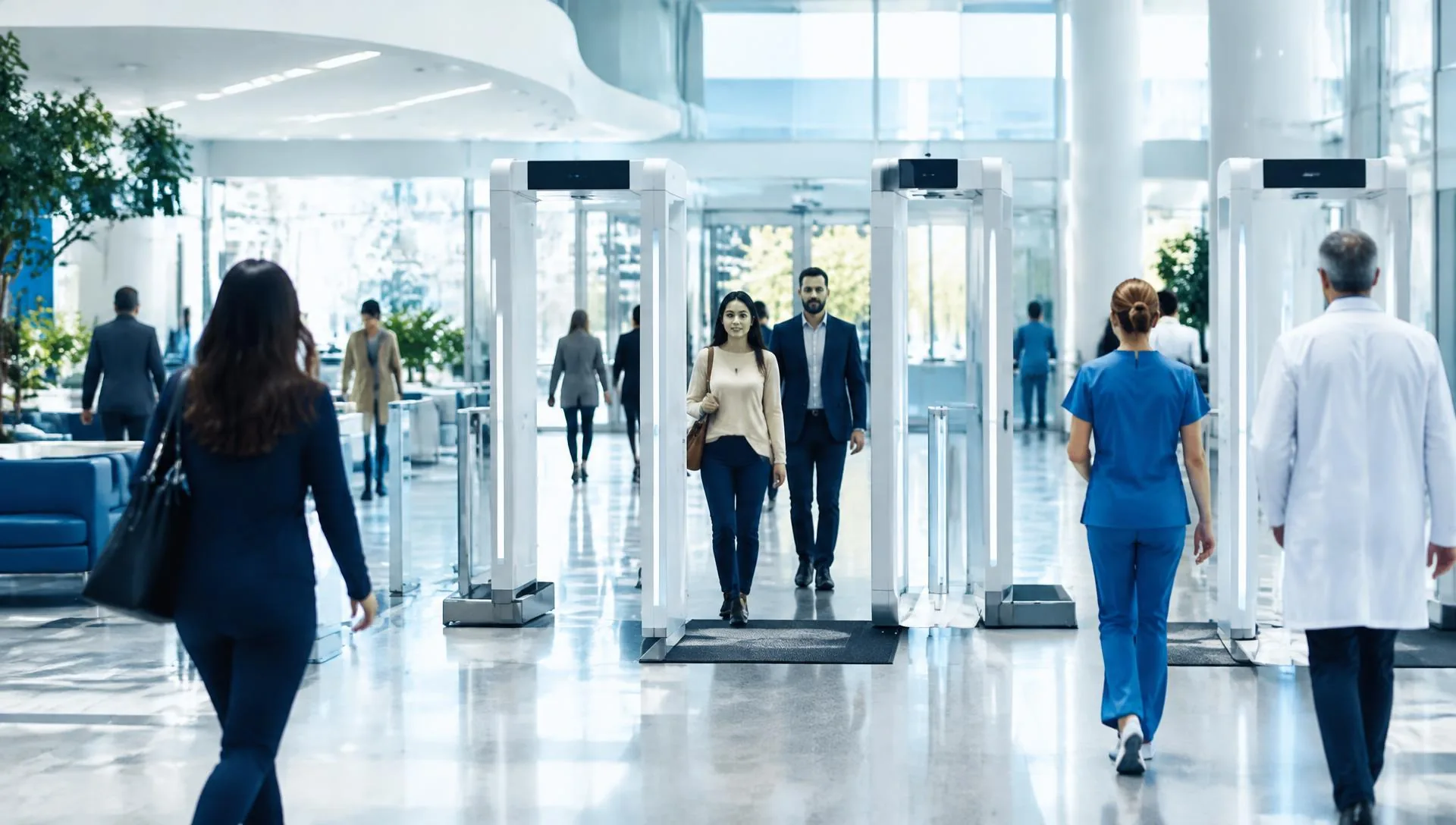
Illustrative image
Key takeaways
Prioritize entrances by risk; emergency departments are often first. Never let screening delay emergency care. Plan for medical devices, wheelchairs, stretchers and accessibility. Train for de-escalation.
Why hospitals screen
Workplace violence in healthcare is a recognized concern. OSHA describes workplace violence as a recognized hazard in the healthcare industry and recommends a written workplace violence prevention program combined with engineering controls, administrative controls and training. [S13] Entrance screening should fit that wider program rather than stand in for it.
Begin with the hospital's existing risk assessment and response procedures. Involve security, clinical leadership, facilities and the people who greet patients and visitors. Discuss where screening could help and where a different control or an alternate procedure is needed. The goal is a practical arrangement that protects people while respecting the urgency and dignity of care.
Explain the proposed role of screening in plain language. It flags potential items for trained people to assess; it is not a decision about a patient's intent. Keep the limitations and the responsibilities of staff visible when leadership considers a deployment.
Choosing entrances
Review the emergency department, main lobby and behavioral health entrances according to risk and actual use. Include after-hours arrangements, any single-entry plan and staff entrances connected to badge access. A map should show how patients, visitors, employees and contractors reach the building, including doors outside the proposed screening process.
Ask which entrances will be screened and how the others will be controlled. Do not assume a public lobby plan automatically fits the ED or an after-hours route. Each has a different flow and needs clinical and security input. Describe how staff direct someone who arrives at another door or needs an alternate route.
Review the complete approach, queue and secondary area before selecting lane locations. The drawing should include the accessible path and the handoff to trained staff. Bring these details into the site survey so the recommendation follows the building and the people using it, not just available floor space.
Patient flow and emergency care
Screening must not delay emergency care. Agree clinical override procedures and triage priority with clinical leadership before go-live. Ambulance bays should sit outside the routine public screening flow, with a clear explanation of how those arrivals connect to the wider security plan.
Staff at the entrance need to know who can direct an urgent clinical situation and how to request that support. They should not be asked to make an improvised medical decision to keep a screening queue moving. Document the override path and make it part of training and handovers.
Plan secondary checks so they do not obstruct the route to care. Patients in crisis, visitors seeking help and people accompanying a patient may need a calm explanation rather than a lengthy instruction at the lane. Review the process from their perspective, including the signs and the staff positions they encounter.
Walk the plan with clinical and security teams together. Ask what happens when normal passage is not appropriate, where staff direct the person and how responsibility transfers. The value of a screening lane depends on that practical connection to care, not simply on how quickly someone can walk through it.
Medical devices and accessibility
Review manufacturer guidance for implanted medical devices and offer alternatives as appropriate. DHS includes medical-device and accessibility considerations in its market survey. [S4] Do not make a blanket assurance for every patient or device; staff should know where guidance is available and who handles a question beyond their training.
Include wheelchairs, walkers and stretchers in the route review. Consider the approach, lane width, alternate screening area and return path, not just the unit opening. A person should be able to ask for an alternative without discussing private medical details in a public queue.
Coordinate the procedure with clinical staff and explain it clearly to visitors. Signs should tell people how to request assistance, while operators should use respectful language and avoid treating the alternative as a failure to cooperate. Accessibility belongs in the normal plan and staffing model.
During evaluation, review how the alternate procedure works alongside routine passage. Ask whether someone needs help reaching it, who provides that help and how the screening decision connects back to care. Record those responsibilities so they are not lost between shifts.
24/7 staffing and procedures
Plan shift coverage for the hours screening will operate, including security officer roles and supervisory support. A procedure that depends on an unnamed person being available is not an operating plan. Identify who monitors passage, who conducts a secondary check and who takes responsibility when a situation requires escalation.
Include de-escalation training and respectful communication in the staffing discussion. People arriving at hospitals may be distressed or focused on care. Operators need an understandable way to explain an alert and ask for cooperation without implying a conclusion about the person.
Set policies for items found, including storage and law enforcement notification where your procedures require it. Explain who makes that decision and how it is documented. Review signage, prohibited items and refusal procedures with the teams responsible for the hospital's policies rather than leaving gate staff to improvise.
Use handovers and refresher training to keep procedures consistent across shifts. Review what operators find difficult and whether the layout supports their roles. Update the written procedure when the process changes, and make sure the current version reaches the staff who will use it.
Integration with hospital security
Connect entrance screening planning with video, access control, duress alarms and mass notification. Review which systems need information and which team acts on it. Integration is useful when it supports an understandable response, not simply because several devices can exchange alerts.
Bring IT into data handling and cybersecurity discussions while clinical and security teams define the workflow. Confirm what information the proposed configuration captures, how it is retained and who can use it. Keep privacy explanations consistent with the process patients and visitors will experience.
Review the entrance after go-live with the same teams that helped design it. Ask whether clinical overrides remain clear, alternate screening is accessible and staff know how to request support. Consider alert patterns, operator feedback and procedure changes together rather than treating tuning as an equipment-only task.
A site survey is the starting point for that connected plan. Bring the entrances, arrival flows, clinical priorities and existing security systems into the conversation. The result should identify where screening adds value, where other controls remain necessary and who is accountable for operating the process.
Keep the entrance explanation available to the teams who support patients and visitors. Review how a person requests assistance, how staff reach clinical support and where an alternate check takes place. Ask whether the signage and spoken instructions respect privacy and urgency. These questions should be answered before a difficult interaction, not left to whoever is working the lane at that moment. Record changes to the procedure and include them in handovers so the next shift has the same guidance. A clear process helps connect screening to care while preserving the limitations and responsibilities established during design.
Frequently asked questions
Will screening slow down the ED?
Design to avoid delaying care, with clinical override procedures.
Can patients with pacemakers be screened?
Follow manufacturer guidance and offer alternatives. [S4]
Continue exploring
Request a site survey
Start with your entrances, your people and a practical plan.